


Wind Farm Cooling: What a Coolant Has to Withstand Outdoors
A converter on a nacelle at minus thirty has no technician within two hours. Turbine cooling is judged by what the fluid survives unattended — cold start, vibration, a leak nobody sees for a week — not by its spec sheet.
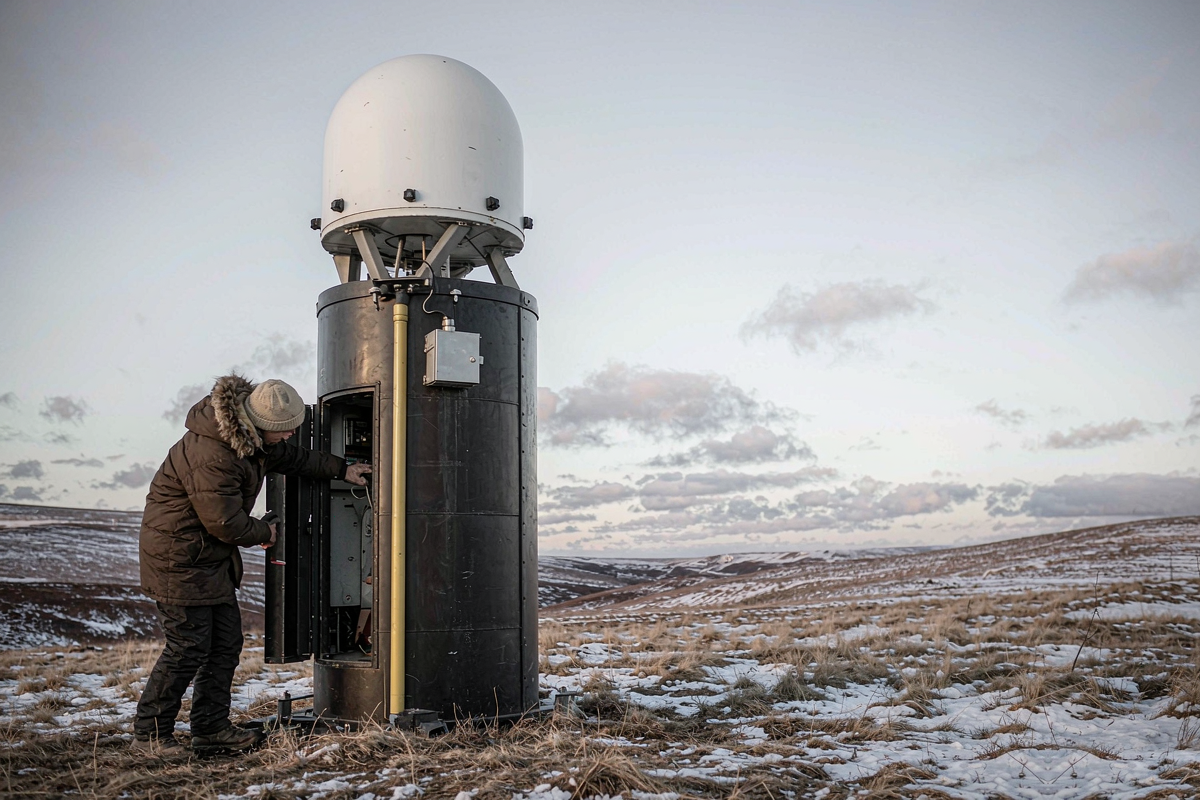
The turbine is several loops, not one
A wind turbine cools more than the generator. Each point has its own demand, and the coolant that suits one may not suit another.
| Cooling point | What it asks of the fluid |
|---|---|
| Converter | Tight temperature band, often aluminium plates, steady reject |
| Generator | Wide load swing, long steady duty |
| Gearbox | High local heat, oil-side interface |
| Transformer | Compact, sealed, little service access |
The converter is usually the strict one. Its power electronics run in a narrow band, and many use aluminium plates the fluid must respect. A grade picked for the generator alone can miss the converter. The converter fails first because it is the strictest, and the strictest point sets the grade for the whole turbine.
What “outdoors” adds to the duty
An indoor loop lives in a building someone controls. A nacelle loop lives in a box on a tower, through every season the site throws at it.
| Outdoor stress | What it demands of the coolant |
|---|---|
| Cold start at minus 30 | Must flow and protect at the lowest ambient, not just at rated |
| Wide ambient swing | Stable across the band, no freeze, no boil |
| Constant vibration | Must not foam or shear the inhibitor |
| Remote, slow discovery | A leak should not become a hazard before anyone sees it |
| Long service interval | Should hold its band with little make-up |
These are operating facts a tower forces on the fluid. A grade that looks fine in a workshop can fail the first winter it has to start cold and run unattended.
The swing is the part indoor loops never meet. A plant holds a setpoint; a tower lives through the whole range between the site’s hottest afternoon and its coldest dawn. The grade has to be stable across all of it, because the tower will visit every point whether the spec writer did or not.
Non-hazardous matters more on a tower
A leak in a plant is found in a day. A leak in a nacelle can run a week before a climb. For that reason the class of the fluid matters more on a turbine than on a factory floor.
A non-combustible, non-hazardous coolant limits what a slow leak becomes. It will not add a fire load to a sealed box, and it will not demand a dangerous-goods response a remote site cannot mount quickly. Our LM-8 , with no flash point and non-combustible, is one option for duties that want that margin; the glycol-versus-engineered view covers when a non-hazardous grade is the right call.
We have seen more than one remote site learn this the hard way, when a climb found a leak that had run longer than the interval allowed. The class of the fluid was the difference between a planned service and an emergency one, and the emergency is the cost nobody budgeted.
Aluminium in the converter
Most turbine converters use aluminium plates, and aluminium is where coolant choices go wrong most often. A package written for steel may not hold the oxide film aluminium needs, and a slow dissolve in a sealed nacelle is the worst kind — unseen until efficiency drops.
Any aluminium duty calls for an L-suffix grade on our side, the L marking a formulation validated for aluminium. The temperature-band selection guide shows which series covers which metal, and the suffix rule is the part specifiers most often miss.
Cold start is the real test
A grade can look perfect at rated temperature and still fail the morning it has to start at minus thirty. Cold start is where viscosity climbs and flow is hardest, and a loop that will not flow on start is a loop that will not cool. The grade must protect the start, not just the run.
This is why we ask for the site’s lowest ambient, not its average. The average never broke a turbine. The lowest morning did, and the grade that covers it is the grade that earns the tower.
Vibration and the inhibitor
A nacelle shakes for twenty years. A fluid that foams under shake, or shears its inhibitor, loses protection in a way a static test never shows. The grade has to hold its film under motion, not just in a still jar.
We treat vibration as a duty input, not a footnote. The make-up need and the film stability are read against the shake, because the shake is what the tower actually does to the chemistry every day.
A note on offshore and remote
Offshore and remote sites sharpen every rule above. The climb is longer, the response slower, and the leak undiscovered for longer still. For those sites the non-hazardous class and the low make-up need move from nice-to-have to the reason a grade is chosen.
A remote site also keeps a longer service interval by necessity, which is why the band must hold with little attention. The grade that needs a technician every quarter is the wrong grade for a tower nobody visits often.
The grade attributes that earn their place
| Attribute | Why a turbine needs it |
|---|---|
| Low-temperature flow | Cold start without a frozen loop |
| Non-hazardous class | A slow leak stays a small event |
| Aluminium-validated | Holds the converter plates |
| Low make-up need | Holds band across a long interval |
| Stable across swing | No freeze, no boil through the season |
No single attribute wins the job. The combination does, because a tower tests all of them at once and hides the result until it is expensive.
What we hand a wind specifier
Send us the duty and we return a written grade, not a category:
- The cooling points and their bands.
- The metals in each, named.
- The ambient low and high at the site.
- The service interval the operator will actually keep.
The operator’s real interval matters more than the textbook one. A site that climbs twice a year should not be specified the same as one with a road to the base. Tell us the interval you will keep, and the grade we name is the one that holds through it, not the one that looks right on paper.
From those four we name the grade and the suffix, and we say where a commodity glycol would have been the mistake. You get the reason, not just the brand. The full set is in our product collection.
The twenty-year view
A turbine is a twenty-year asset, and the cooling fluid is bought once to serve most of that life. The grade that looks cheap on the spec sheet and needs attention every season becomes the expensive one by year ten, once the climbs and the change-outs are counted.
We counsel specifiers to read the grade against the whole life, not the commissioning. The attributes that earn their place — cold flow, non-hazardous class, aluminium hold, low make-up, swing stability — are the ones that still matter in year fifteen, when no one is watching the loop closely. The cheap grade on the spec is rarely the cheap grade at end of life, once the climbs and change-outs are counted.
FAQ
What does a wind turbine cool?
Generator, converter, gearbox, and transformer each have a cooling demand. The converter is usually the strict one, with a narrow band and often aluminium plates.
Why does the coolant class matter more on a turbine?
A nacelle leak can run a week before anyone climbs. A non-hazardous, non-combustible fluid keeps a slow leak a small event, not a fire or dangerous-goods call.
Do wind converters need aluminium-safe coolant?
Most do. Aluminium plates need a package that holds their oxide film. A steel-written inhibitor can let the metal dissolve slowly and unseen.
Can I use the same glycol as my plant?
Maybe. If the converter is aluminium and the site is cold, a standard glycol may miss the band or the metal. Send the duty; we name the grade and suffix.
What fails a turbine coolant in winter?
A cold start it cannot flow through, or a freeze it cannot survive. The grade must protect at the lowest ambient, not just at rated temperature.
How often should a turbine loop be sampled?
On the interval the operator keeps, which on a remote site is long. That is why low make-up need and a stable band matter more than on a plant you walk daily.
Is a non-hazardous grade always the choice?
Not always, but for a sealed, remote, vibrating box it removes the worst outcome of a leak you will not see soon. The duty decides.
How do I specify the right grade?
Send the four inputs — points and bands, metals, ambient range, service interval. We return a named grade and the reason, not a default.
Final thoughts
Turbine cooling is judged outdoors, unattended, across twenty years of swing and shake. The grade that wins is the one that flows cold, stays non-hazardous in a slow leak, and holds aluminium plates — not the one with the best warm-room spec.
Send us the four inputs above. Glacier Coolant will return a named grade, the suffix that matters, and the reason, so your towers are specified on the tower, not on the brochure.
Post time: Oct-15-2026