


Glacier Thermal Opens Its BOX7 Testing Platform to Set a New Bar for Coolant Validation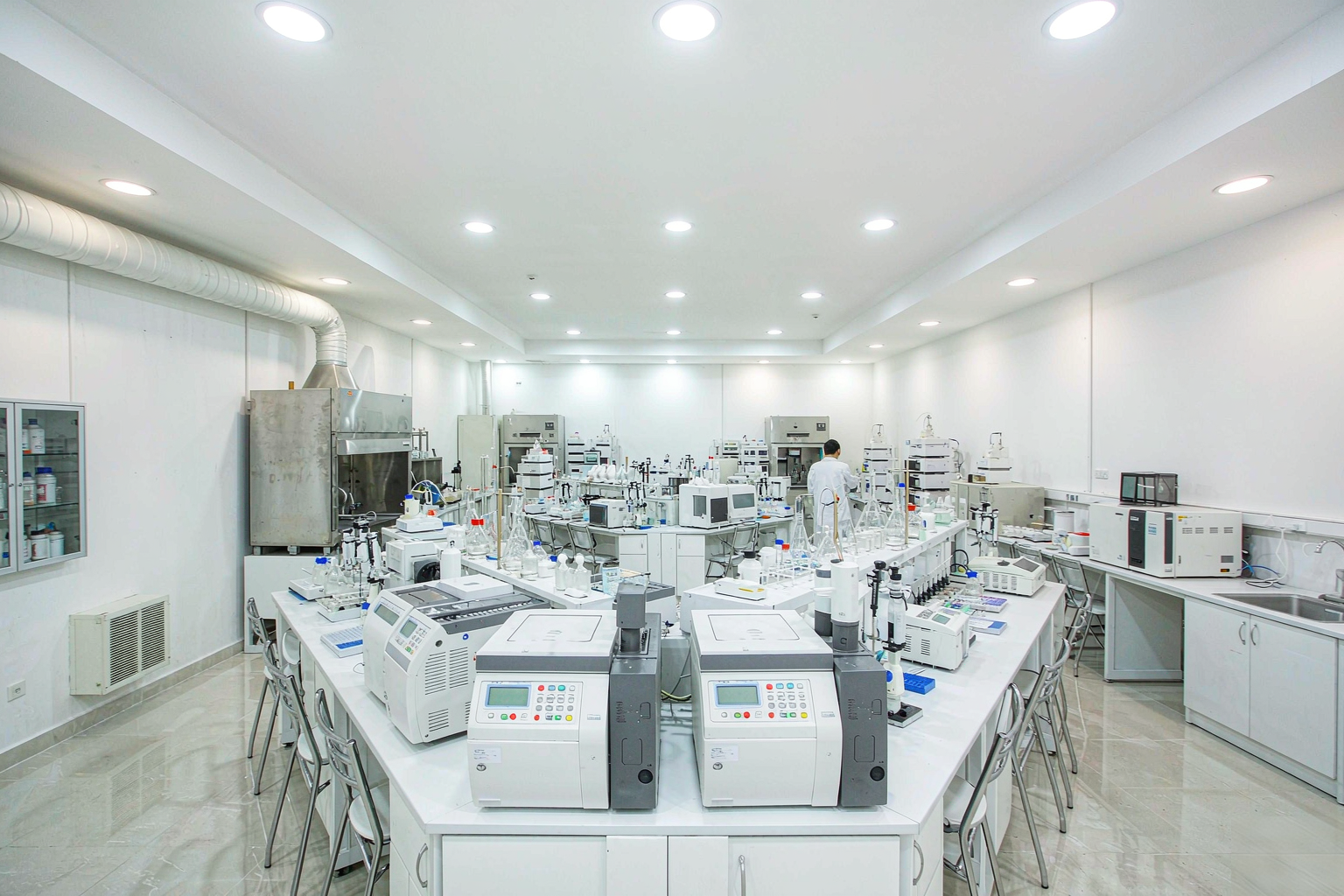
Seven instrument systems, one rule: no performance claim leaves the building without real data behind it.
Founded as China’s first specialist manufacturer dedicated to secondary refrigerants, Glacier Thermal — known domestically as Glacier Coolant — has spent three decades studying what happens to a cooling medium after it has been circulating through a closed loop for years rather than weeks. Its product line now spans a full series of secondary refrigerants plus the LM-XR family of phase change storage materials, serving fine chemical process control, low-temperature freezing, thermal storage and pharmaceutical reaction cooling. This month the company is opening up the infrastructure behind those products: a testing platform it calls BOX7.
The name is deliberately unglamorous — a box, seven instruments. The point is the capability gap it addresses. Across much of the coolant industry, quality control amounts to a bench, a hydrometer and a handful of basic physico-chemical spot checks. A vendor can confirm that a batch has the right freezing point and pH on the day it ships. What that vendor generally cannot do is predict how the same fluid will behave after eighteen months of circulation at minus 25 degrees, or whether it will still protect the carbon steel, copper and aluminium surfaces it touches every hour of every day.
The failures that follow are familiar to anyone who maintains industrial refrigeration. Viscosity climbs until pumps work harder and flow rates quietly drop. Heat transfer coefficients degrade, so a system that was sized correctly on paper can no longer hold its setpoint. Inhibitors deplete, and corrosion begins where nobody can see it. Dissolved solids and degradation products form deposits that narrow channels, foul strainers and starve evaporators. Not one of these appears on a certificate of analysis.
BOX7 is built around a simple premise: a coolant should be evaluated under conditions that resemble the job, not the factory floor. The platform integrates seven instrument families into a single closed-loop evaluation workflow that follows a product from formulation development, through factory release, and on into the analysis of fluiddrawn from systems already in service.
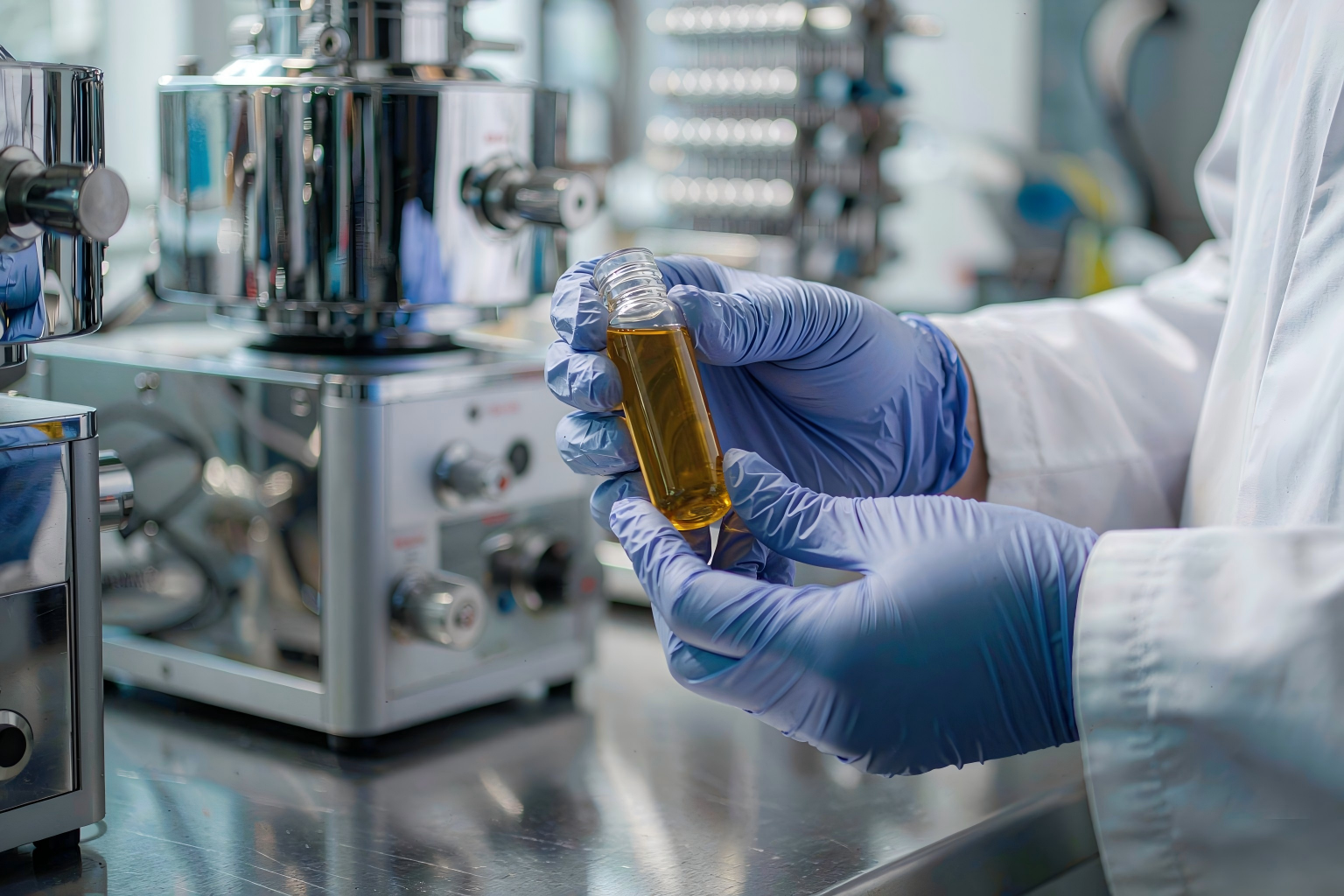
coolant sample is checked for composition and stability before entering long-cycle evaluation.
The first cluster is composition analysis. Gas chromatography–mass spectrometry, gas chromatography and atomic emission spectrometry are used together to identify and quantify what is actually in the fluid — verifying active ingredient content batch to batch and tracking how composition drifts after long periods of circulation. It is unglamorous work, but composition drift is where most long-term surprises begin. A change of a few percent in inhibitor concentration can be the difference between a protected loop and a leaking one, and the change is invisible without instrumentation that can resolve it.
The second cluster measures how a fluid behaves when it is cold, which is when secondary refrigerants earn their keep. Freezing point and low-temperature viscosity instrumentation, a thermal conductivity tester and a specific heat measurement system are used to reproduce real operating temperatures instead of room-temperature approximations. The outputs are the numbers that actually determine system design: how much pumping power the loop will demand at its coldest point, how quickly heat will move through the heat exchanger, how much cooling a given volume of fluid can carry from one end of the circuit to the other.
The third cluster is where the company’s background shows most clearly. Electrochemical corrosion testing equipment is used to examine how candidate formulations interact with carbon steel, stainless steel, copper and aluminium — metals that frequently appear together in the same refrigeration or process cooling circuit. The objective is not simply to record a corrosion rate but to understand how corrosion initiates and propagates in a given chemistry. Those findings feed directly back into the M3 inhibitor framework, a model of metal surface protection Glacier Thermal has refined across years of formulation work, creating a continuous loop between measurement and recipe.
For customers, the practical value is that claims arrive attached to test conditions. A fluid specified for a minus 30 degree brine loop can be quoted with measured viscosity at that temperature, measured thermal conductivity at that temperature, and measured corrosion behaviour against the specific alloys in the circuit. And when a system underperforms two years later, the same instruments can be turned on the fluid that came out of it.
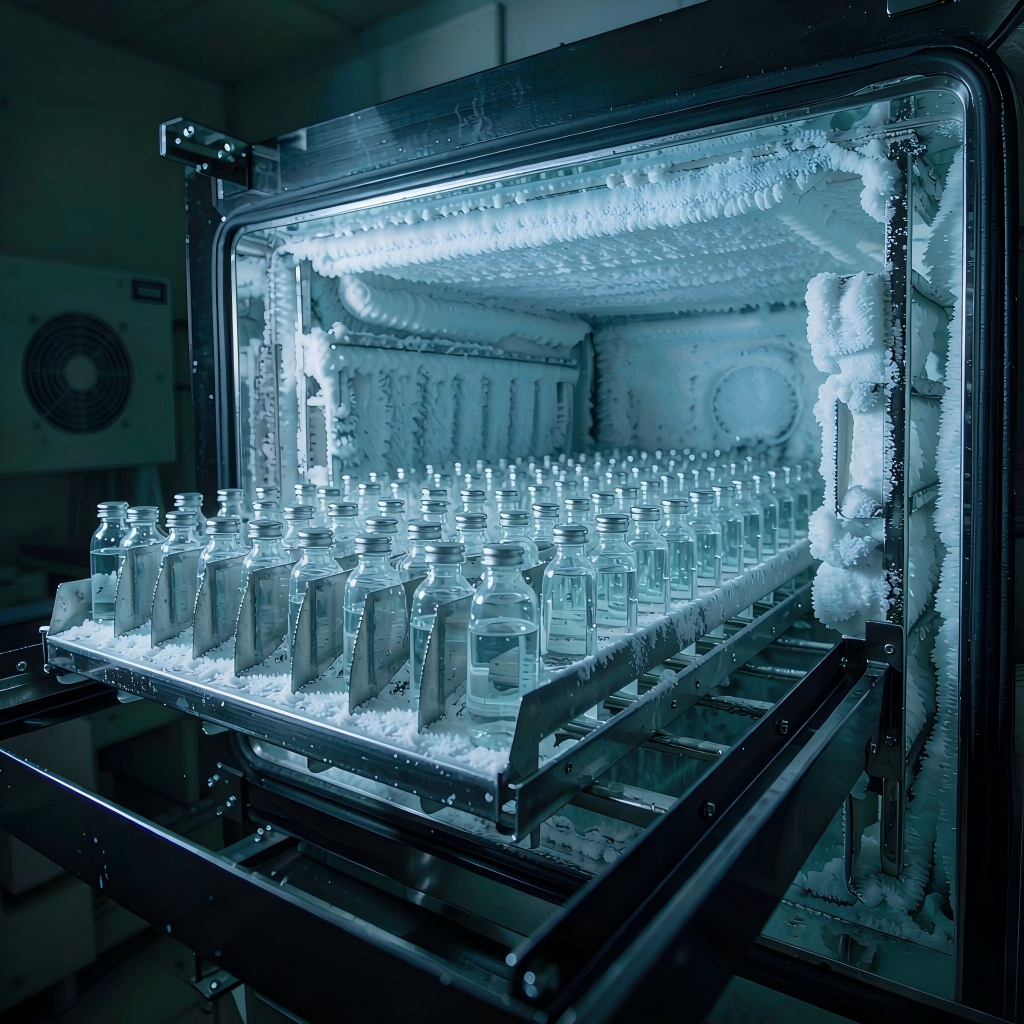
Low-temperature chambers reproduce real operating conditions down to minus 30 °C and below.
That last point is what makes BOX7 more than a quality gate. Because the platform tracks in-service fluids as well as fresh ones, Glacier Thermal can offer services most coolant suppliers cannot: aging monitoring programmes that sample operating loops at intervals and chart degradation over time; root-cause analysis when a system develops an unexplained temperature excursion or a rash of leaks; and compatibility testing when a customer wants to change container materials, top up an existing charge, or move to a different formulation without draining and flushing the entire loop.
There is a strategic argument underneath all of this. Secondary refrigerants are a low-visibility, high-consequence purchase. A plant that saves a few percent on fluid cost and then loses a week of production to a corroded heat exchanger has made a bad trade — but the arithmetic only becomes visible after the fact. Glacier Thermal’s bet is that buyers increasingly want suppliers who can show the data rather than assert the quality, and that a testing platform is a more durable advantage than any single formulation.
The company is explicit that its conclusions rest on measured results rather than accumulated rules of thumb. Every product statement traces back to instrument output, and the same instruments are available for custom formulation work when a customer’s process falls outside the standard catalogue — an unusual temperature window, an uncommon metallurgy, or a heat transfer requirement that off-the-shelf products cannot meet.
Three decades in, Glacier Thermal’s position is straightforward: the coolant is not a commodity but a component with a measurable service life. BOX7 is the instrument of that argument. For plant engineers who have spent years treating the fluid as a given, it is an invitation to start asking what the datasheet left out.
Need help sizing a thermal-storage or coolant solution?
Glacier Thermal engineers pair you with the right formulation, container layout and integration plan for your facility.
Post time: Sep-21-2026